
Patrick Keohane - Antarctic Explorer 1910-1913
The Polar Expedition with Captain Robert Scott
Patrick Keohane joined the Royal Navy in 1895. at the age of sixteen. He began his career as a Boy – Third Class , progressed to Ordinary Seaman, then Able Seaman and at the age of twenty-eight was promoted to Chief Petty Officer, the highest rank a non-commissioned man could attain. Having previously served under Lt. Teddy Evans, who was Scott’s second in command for the Antarctic expedition of 1910 Keohane applied to be included and was successful.
With fellow Corkmen, Robert Forde of Kilmurray, Mortimer McCarthy of Kinsale and Kerryman, Tom Crean of Annascaul, Patrick Keohane formed the backbone of brawn and practical skills without which no expedition could succeed. Carpentry, rope and leather work, dog and pony husbandry, sheer physical strength and endurance were their stock in trade. These hardy sailors had to rely on superhuman grit and determination, overcome psychological and physical challengers and horrific weather conditions in the world’s most inhospitable environment – the Antarctic.
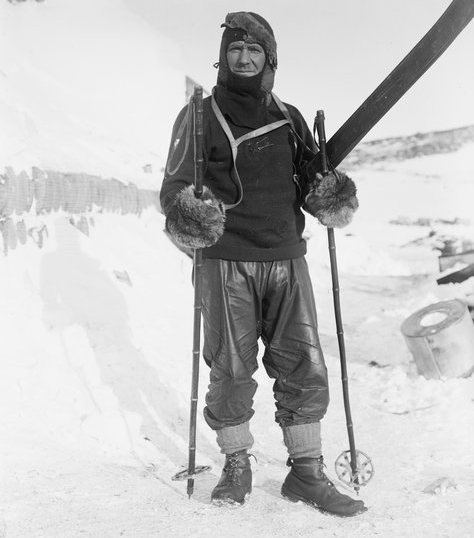 Patrick Keohane - Antarctic Explorer 1910-1913
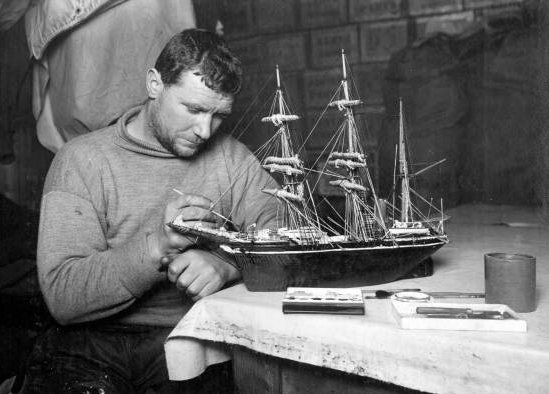 Patrick Keohane completing his model of the Terra Nova
The expedition arrived in Antarctica in January 1911 and the first task was to build a hut at Cape Evans. Scott’s Hut still stands and is preserved. Scott relied on motor-sleds, Siberian ponies and dogs in his effort to reach the Pole. The motor-sleds broke down, the ponies struggled in deep snow and the dogs were sent back to the ship after a month. The men then had to don harness and pull heavily laden sleds.
Having organised several advance food depots, sixteen men, including Keohane, left Cape Evans in October 1911 in an attempt to reach the Pole.
On 21 December 1911, 350 miles from the Pole, Keohane and three others, on the orders of Scott, set out to return to base. They endured a 600 mile slog and arrived at Scott’s Hut on 28 January 1912.
On January 4, 1912, 150 mile from the Pole, three more men, including Tom Crean, were ordered to return to base by Scott.
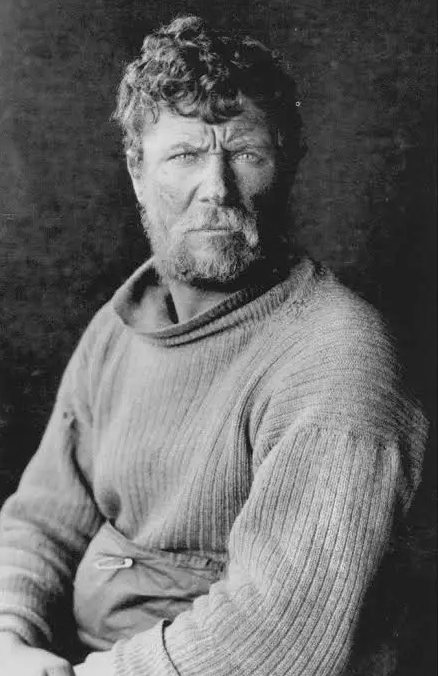 Patrick Keohane
On 16 January 1912, Scott learned that Amundsen, leading a Norwegian expedition, had already reached the South Pole. Despondent, cold, exhausted and increasingly hungry, Scott and his companions turned and headed for Cape Evans..
None of them survived the journey and on 29 October 1912, Keohane was one of an eleven-man team who set out from Cape Evans to search for Scott and his companions. Three weeks later they found the tent with the body of Scott and two others inside. Scott’s diary was retrieved and revealed a personal fondness and respect for Patrick Keohane.
The party returned to base and then proceeded to make the long journey home.
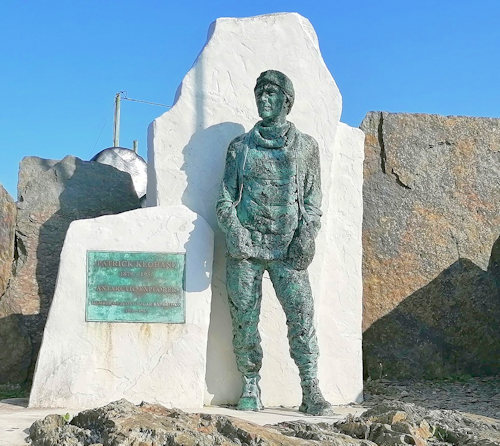
For their participation in the Expedition, albeit it not succeeding it its primary aim, Keohane and his companions were awarded the Polar Medal and it was presented by King George V at Buckingham Palace.
Just before the outbreak of World War One, in May 1914, Patrick Keohane married Ivy O’Driscoll of Courtmacsherry. He returned to serve in the navy for the duration of the war but when he returned to Courtmacsherry after the Armistice, like many other returning servicemen and despite his heroism and fame, Patrick Keohane felt unwelcome.
He accepted a posting in the Coastguard service and spent the rest of his life in England.
Patrick Keohane died in Plymouth in 1950 and was buried there. At his funeral, a companion from the Polar Expedition said “He was a man who wanted to see what was on the other side of the hill – and he saw”