
Explore this growing archive of local history in Barryroe and surrounds
Irish Times: 16 September 1939
U-Boat Captain Cheered her Search for Rescue Ship Care for Victim’s Safety
Sinking of British Influence
The crew of the torpedoed oil tanker “British Influence”, cheered the U-Boat commander who on Thursday saw them safely aboard the Norwegian vessel, “Ida Bakke”, and the German captain returned their cheer.
The facts were told when yesterday the rescued men were landed from the lifeboat at Courtmacsherry, County Cork.
Rescued Men at Courtmacsherry
From our Correspondent CLONAKILTY, Friday.
At 9.30 this morning the Courtmacsherry lifeboat landed the crew of forty-two of the oil tanker, “British Influence”, which was torpedoed at noon yesterday 200 miles off the Fastnet. At 6.30 a.m. today the lifeboat, acting on instructions from Lloyd’s agent in Cove, went to sea and took the men off the Norwegian cargo vessel, “Ida Bakke”, which had picked them up after they had been several hours adrift and arrived off the Seven Heads, coast of Cork. The “Ida Bakke” proceeded on her voyage to Panama after the lifeboat brought the men ashore.
The crew, who are all safe, were made comfortable at Courtmacsherry this morning and afterwards they left for Cork en route for England. One member, A. Sterling, of London has sustained an injured knee. He was attended to by Dr. James Sheehy, Timoleague.
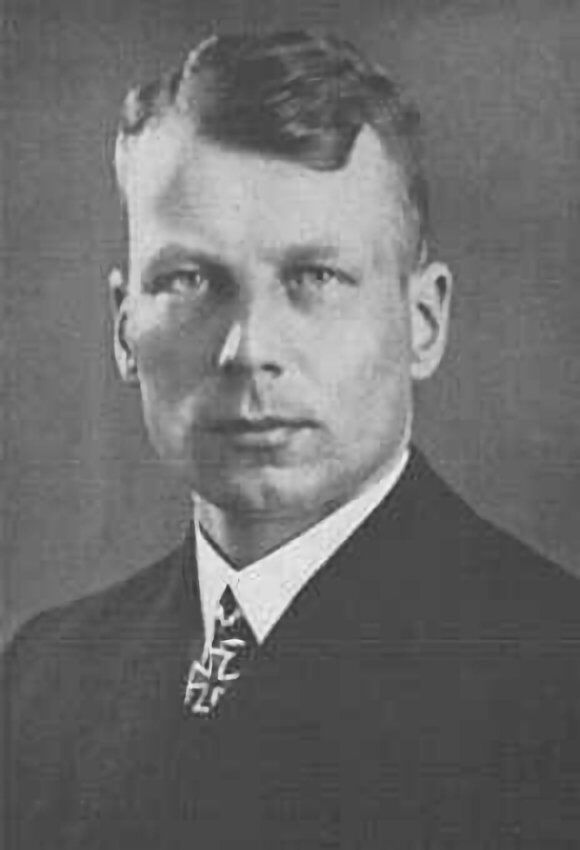 Kapitänleutnant Otto Schuhart (1 Apr 1909 - 10 Mar 1990)
Commander of U-Boat U-29
The following are some extracts from the Courtmacsherry and District Notes in the Southern Star during World War One
4th March 1916: Recruiting Meeting at Courtmacsherry
A meeting was held at Courtmacsherry on Sunday, the 27th February, at 10.30 o’clock under the auspices of the Clonakilty Recruiting Committee. The Pipers played some nice selections previous to the meeting and headed the congregation coming from Church.
The following members travelled from Clonakilty, Messrs T. J. Canty J.P., C.U.D.C., M.C.C.; H. Hoskins, M.P.S. (Hon. Sec.); J. Helen, U.D.C.; John Rowan, D.I.,R.I.C.; S.H. Levis, Manager, M. & L. Bank; J. T. Wheeler, Agent, Bank of Ireland; T. O’Regan, Egg Dealer. Also present were County Inspector Tweedy; Capt. O’Driscoll; R. J. Ruddock R.D.C.; Capt. Hawkes; Johnson Travers; Lance Corporal Vaughan;, R.A.M.C.; Ml. O’Hea, J.P.; Sergt. Leo Wylie, recruiting sergeant; William Murphy, R.D.C.; John White, R.D.C.; J. D. O’Driscoll, R.D.C.; M. G. Hegarty, Thos. Brophy and J. Whelton, Currihy.
On the proposition of Mr. T. J. Canty, seconded by Mr. R. J. Ruddock, Captain O’Driscoll took the chair.
Mr. J. T. Wheeler (Agent, Bank of Ireland) said they had travelled from Clonakilty and they all knew for what purpose this meeting was held. (Hear, hear). He was not there that day to speak to them on any religious or political subject, but he was there to tender a word of advice and reason; he was connected with the people of their village for the last 25 years, he was acquainted with nearly every person around there.
He need not tell them that England and her Allies are at war with Germany and other nations; they all knew that, and perhaps better than he did. They had seen and read it in the papers and had debated it in conversation, he need not dwell on the magnitude of the war, he said Courtmacsherry had done a fair share, but there may be a few more to come yet and assist.
In December 1701 the slave ship, “Amity”, owned by the Royal African Company and bound from Guinea to London was blown off course in a severe Atlantic storm and ended up being wrecked off the Seven Heads at Dunworley
The “Amity” was a large ship, believed to have been ninety-feet in length. She was carrying a cargo of ivory and a hardwood from the African Padauk tree known as camm-wood. She struck a reef in Dunworley Bay, the ship was pounded by the relentless Atlantic storm until she broke up and all hands on board, bar one negro cabin boy, were lost.
It is not know how many crew were on board the vessel, but a ship of that size would normally have had fifty crew to man the vessel. The only name known was that of the captain whose surname was Phaxton.
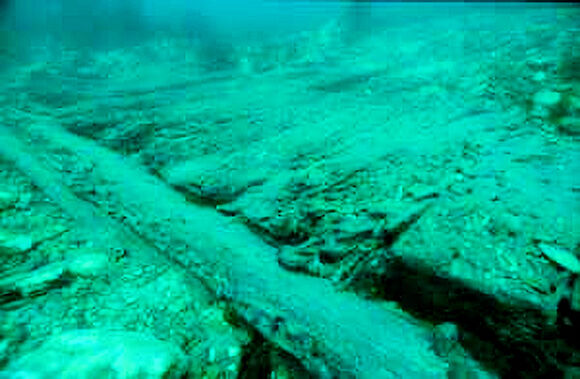 Amity wreck
A Long Road Home
When Courtmacsherry and Barryroe History Group compiled the list of servicemen from the parish of Barryroe who died in service during World War One, Daniel Sullivan from Ballinluhig was the only one of the twenty-nine commemorated who had died while serving with the American forces.
Daniel Sullivan was born on January 1, 1894, son of William and Mary Sullivan, nee Kirby, Ballinluhig, Butlerstown.
He had six siblings, Willie, Margaret, Julia, Patrick, Michael and John. Rather unusually for a large family, Daniel was the only one of the six Sullivans to emigrate. It has not been possible to identify Daniel Sullivan on passenger lists of Irish migrants to the U.S. but it is likely to have occurred after he reached the age of sixteen, in 1909.
When Daniel Sullivan emigrated, while there were political tensions in Europe, he could not have imagined the turn his life would take and that the United States would become a participant in a war that would engulf the world and that he would be conscripted to serve in the army of the country to which he sailed with such hope for a life more prosperous than Ireland could offer him.
Notwithstanding these details about his early life, Daniel Sullivan’s closest relative, Mary Fleming, daughter of his brother Patrick, had little detail about his life in America, service in the army and the circumstances of his death. Persistent enquiries have now uncovered answers to some of those questions.
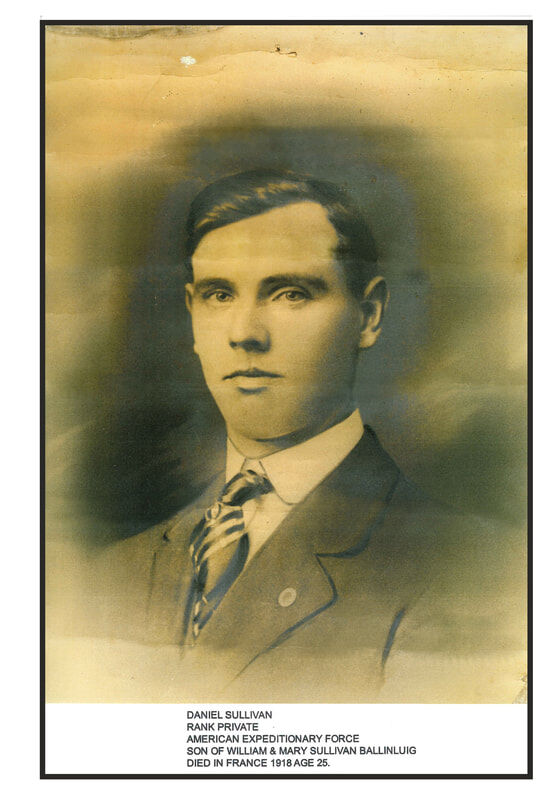 Private Daniel Sullivan - United States Army - World War One
Southern Star: 26 November 1938
Lislevane sea-captain: Impressive Scenes at Funeral in China
Native People in Tears
The unwonted sight of a large body of Chinese in tears at a European’s funeral was witnessed in Hong Kong towards the end of last September. The occasion was the obsequies of Captain Michael McCarthy, Skipper of a South China river steamer, who was born at Butlerstown, Lislevane. A people’s gratitude for unfailing kindness, lavish generosity and practical interest in their spiritual and temporal welfare was the impelling motive in this impressive tribute.
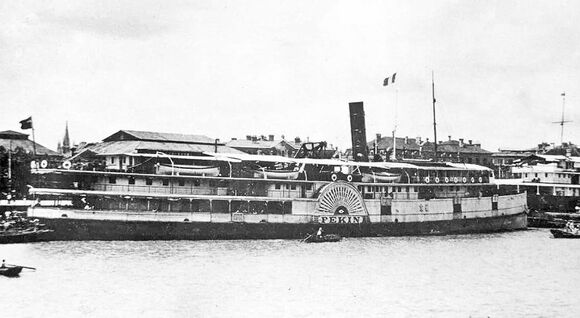 'Pekin' an example Chinese Paddlesteamer from the period
Comprising mostly of English ex-navy men, the Coastguard service in Ireland was established in 1818
Ireland was an unpopular posting for Coastguard personnel. Accommodation was considered poor and stations were isolated while education and employment opportunities for sons and daughters were limited. Very few Irishmen joined the Coastguard.
The Coastguard acted as a reserve for the navy, protected the Revenue’s interests and defended the coast by being active against smugglers; ensuring that wrecks were not illegally plundered and assisting the police in discovering illicit stills. None of these activities endeared the Coastguard to the local population.
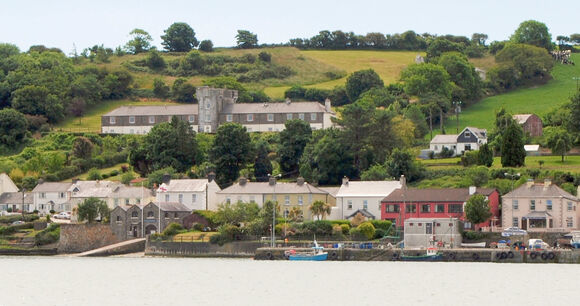 Courtmacsherry Coastguard Station
by Mary Sheehy - O'Shea
The ditty said ‘all to one side like the town of Courtmac’ but up to the 1960s, coming into the village from Timoleague, it wasn’t like that at all.
In Sebera, all the houses were on the seashore side. The railway closed in 1961. At some stage the residents, or what remained of them, were relocated to St. Joseph’s Place and the houses were demolished.
That part of the village is now referred to as Siberia, but having gone to the local National School, which was between Upper and Lower Sebera, I never heard it referred to, alluded to or called anything other than Sebera, pronounced Sibeire. I knew the place and the people, but how reliable my memories are, we shall see.
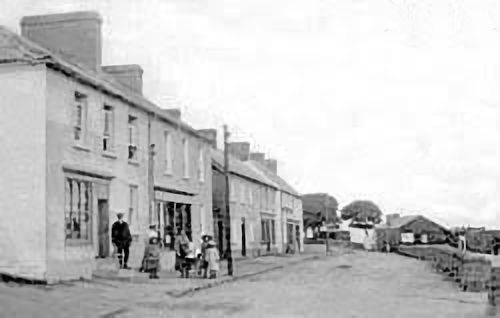 Memories of a Courtmacsherry Childhood
The O’Leary family of Curriheverin played a distinguished part in the life of the parish of Barryroe at least since the 1850s
They are inextricably linked with the Coughlan family, who originated in the parish and whose contribution to Irish-American legal and political life is the subject of a separate entry on this website.
Daniel O’Leary is listed in Griffith’s Valuation (1852) as leasing circa eighty-two acres at Curriheverin West from the Ladies Boyle.
In 1883, on the death of Daniel, the land was transferred to his son Cornelius O’Leary, except for circa six acres that was transferred to Rev. John O’Leary, presumably another son.
The practice of creating Cillíní burial sites in West Cork arose from a combination of social, religious, and economic factors
In past times many families could not afford formal burials in consecrated ground, particularly for children who died at a young age. As a result, these small, informal burial sites sprang up, often located near churches or in remote rural areas. In Barryroe, the seventeen known cillíní serve as poignant reminders of the hardships faced by families during times of high infant mortality.
Here is a video of the Cillín at Donaghmore, Lislevane
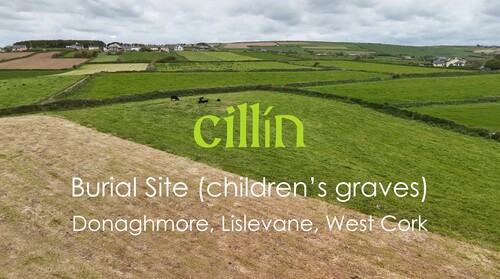 The Cillín at Donaghmore
John Cohalan
John Cohalan owned a small holding in Courtmacsherry before he left for the United States at the height of the famine in 1848. His wife, Catherine McCarthy, had already died and John Cohalan was accompanied to America by his three young daughters and his son, Timothy, who was twelve years old.
It is worth noting that Catherine McCarthy’s family already had a notable connection with the United States. She was the daughter of Captain Eugene McCarthy who had served as an aide-de-camp to the Marquis de la Lafayette during the American Revolution. Eugene McCarthy had returned to Ireland after the Revolution.
The Cohalan family first settled in Pierrepoint in upstate New York but by 1849 they had moved to Middletown, Orange County, a town in the Hudson Valley. John Cohalan, according to the 1861 Census did not remarry and had begun trading as a grocer.
Timothy Eugene Cohalan
Timothy, son of John Cohalan, became involved in the building trade and also established a very successful glass business. Timothy Eugene Cohalan died 8 December 1909. The following obituary published in the Southern Star gives a comprehensive outline of his life and career.
Southern Star 1 January 1910
Famous Courtmacsherry Man
His death in America
The late Timothy Eugene Cohalan
Sketch of his Career
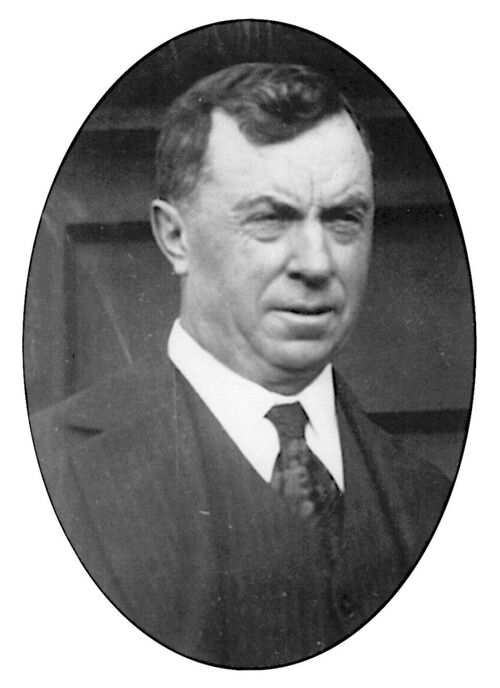 Daniel F Cohalan
Patrick Keohane - Antarctic Explorer 1910-1913
The Polar Expedition with Captain Robert Scott
Patrick Keohane joined the Royal Navy in 1895. at the age of sixteen. He began his career as a Boy – Third Class , progressed to Ordinary Seaman, then Able Seaman and at the age of twenty-eight was promoted to Chief Petty Officer, the highest rank a non-commissioned man could attain. Having previously served under Lt. Teddy Evans, who was Scott’s second in command for the Antarctic expedition of 1910 Keohane applied to be included and was successful.
With fellow Corkmen, Robert Forde of Kilmurray, Mortimer McCarthy of Kinsale and Kerryman, Tom Crean of Annascaul, Patrick Keohane formed the backbone of brawn and practical skills without which no expedition could succeed. Carpentry, rope and leather work, dog and pony husbandry, sheer physical strength and endurance were their stock in trade. These hardy sailors had to rely on superhuman grit and determination, overcome psychological and physical challengers and horrific weather conditions in the world’s most inhospitable environment – the Antarctic.
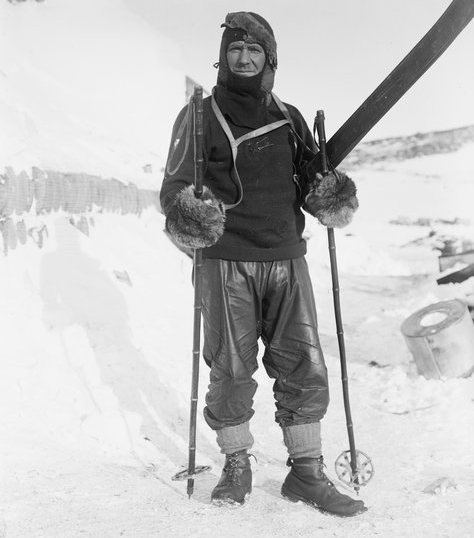 Patrick Keohane - Antarctic Explorer 1910-1913
Timothy Keohane Coxswain - Courtmacsherry Lifeboat 1901-1924
Timothy Keohane’s Role on 7 May 1915
The Courtmacsherry Lifeboat, Kezia Gwilt, was based at Barry’s Point, several miles from the village of Courtmacsherry. The crew were drawn from the hamlets, called Barry’s Point and Coolbawn, situated at either side of the beach known as Blind Strand.
The Stephens class self-righting lifeboat Kezia Gwilt was 37.5 feet (11.4 metres) long. She was powered by 12 oars and sails. She was stationed at Barry’s Point. On 7 May 1915, Coxswain Timothy Keohane was on Coastwatch for the British Government on the brow of Barry’s Point. The following is the interview he gave some time after the events of 7 May to The Southern Star.
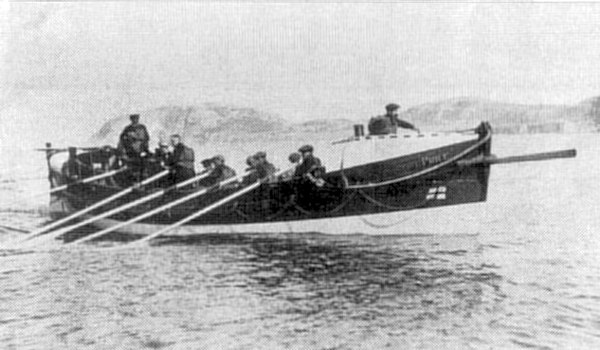 The Kezia Gwilt - 7 May 1915
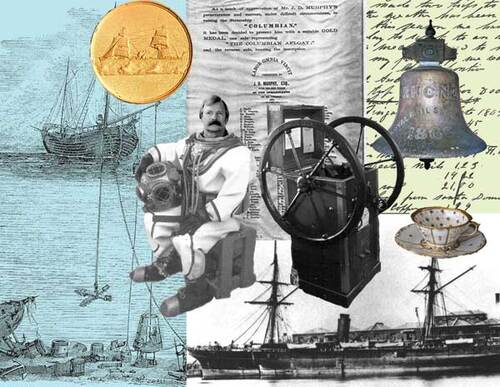 Jeremiah Denis Murphy: 1832 - 1895
Diver ahead of his time
One of the great pioneers of deep sea diving, Corkman Jeremiah Denis Murphy, is still feted thousands of miles away from his birthplace.
Born in Melmane, near Courtmacsherry, in 1832, he made his name in the late 19th century on the Caribbean islands of the Turks & Caicos, which hit the headlines in September when they were ravaged by Hurricane Irma.
His story is the centrepiece of the Turks & Caicos National Museum, whose chairman, Dr Donald H. Keith said: "Murphy's story is so amazing and he was so larger than life, it is surprising he hasn't been discovered by Hollywood!"
The islands are today a magnet for scuba divers but Dr Keith said:
"Few now realise that diving here started in about 1854, when a Boston-based undersea treasure-hunting company used Grand Turk as their headquarters while exploring for shipwrecks to salvage. Jeremiah, a young Irish helmet diver, was among them.
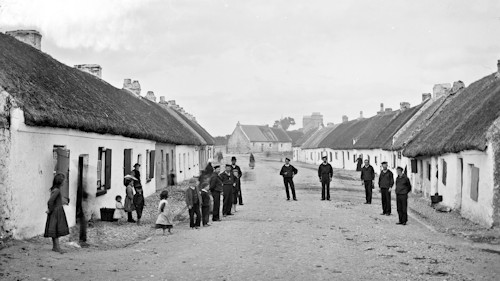 Photo source: National ArchivesThe long-awaited records of the 1926 census are finally available to the public
Two major events are to take place for the country of Ireland.
On the 18 April 2026 the long-awaited records of the 1926 census have finally been made available to the public.
View the 1926 records for:
And on the 9 May 2027 the next census of population will take place.
What is a Census?
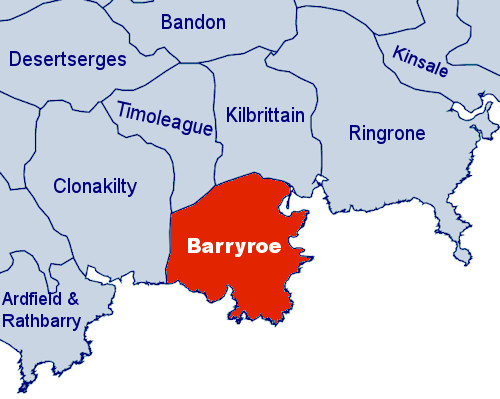 Map of surrounding parishesHow the Parish got the name Barryroe
The history of the name Barryroe for the Parish is vague and quite complicated. To summarise, ‘Barry’ has its roots in the lands under the patronage of Saint Barruch being given to a Norman (therefore French) military clan calling themselves the people of Barruch i.e. de Barri. The ‘Roe’ part refers to Lawrence Barry (c. 1400) who was named 'Red Barry' possibly because he had a red complexion or even red hair? Ruadh is Irish for Red so Barra Ruadh or Barraí Rua anglicised became Barryroe.
The Parish includes townlands such as of Abbeymahon, Ardgehane, Ballycremond, Butlerstown, Carrigeen, Courtmacsherry, Donaghmore, Dunworly, Grange More/Beg, Lehenagh, Lislevane, Shanaghobarravane, and Ternanean.
Variant forms of the parish name
Search
Local History
-
Rescue of U-29 Crew - 1939
-
Courtmacsherry Notes: Southern Star - March 1916
-
Wrecks in Dunworley Bay
-
Private Daniel Sullivan - United States Army - World War One
-
Lislevane Sea Captain Michael McCarthy
-
Courtmacsherry Coastguard Station
-
Memories of a Courtmacsherry Childhood
-
The O'Leary Family of Curriheverin
-
The Cillín at Donaghmore
-
Judge Daniel F. Coholan: The Courtmacsherry Connection
-
Patrick Keohane (1879-1950)
-
Timothy Keohane (1853-1937)
-
Jeremiah Denis Murphy: 19th Century Diver
-
The National Census 1926 and 2027
-
The names of Barryroe