
From the rugged coastline, saltmarshes, meadows and woodland discover the fascinating wildlife in the area of Barryroe
By Denis O’Regan
Dolphin DNA from years ago!
Last week a research paper was published on 14 August 2026 which describes the findings regarding a genetic study of the three distinct groups of Bottlenose Dolphins around Ireland namely the Shannon Estuary, Coastal and Offshore populations.
This study included the known five solitary dolphins of which Fungie was probably the most well-known. DNA samples were collected from four of them but the research began just after Fungie was last seen in October 2020.
In July 2021 I happened to be aboard the Celtic Mist for a week surveying the genetically distinct Bottlenose Dolphins populating the Shannon Estuary and nearby locations.
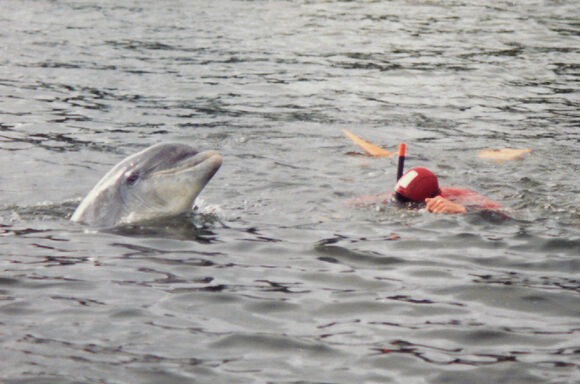 Denis with Fungie in 1988
by Denis O'Regan
Build it and they will come
We are so privileged to have an acre field behind our house. It has been through several stages including home to six rare-breed sheep, chickens (which can no long range free) and grazing for calves. However for the past five years the field has not been touched and it has been let go wild. At first swathes of thistles and nettles dominated but after a couple of years the field began to find it's own balance.
In order to create more biodiversity the building of a pond was always in the plan. So this project finally got going and it was delightful to observe within minutes of adding the water four Pied Wagtails came down to inspect it. No fish are planned (as they eat everything and soil the water) and the next day the first visit from a dragonfly was spotted. A couple of days later three Emperor Dragonfly visited and began laying eggs on the pond plants and barley straw used to help control the growth of algae.
With a little patience I managed to take this stunning photo and video...
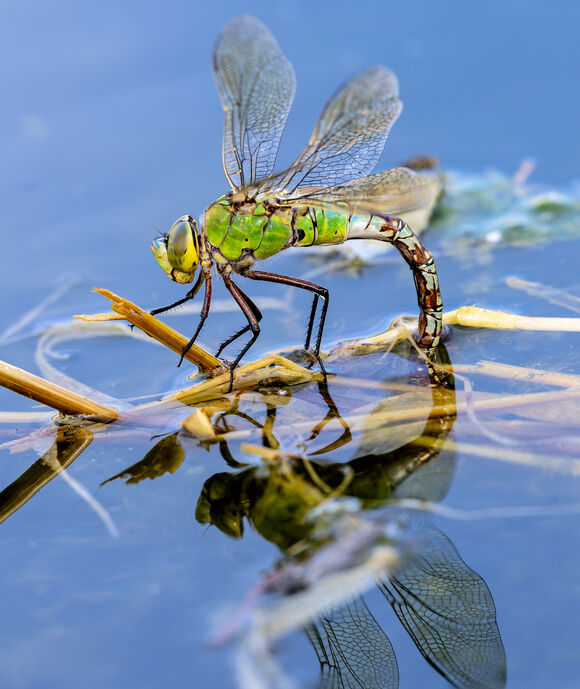 Emperor Dragonfly or Blue Emperor (Anax imperator)
by Denis O'Regan
Fascinating facts about the Gannet
I am privileged to regularly observe Gannets from our home on the Atlantic here in West Cork. They are a remarkable bird that capture my curiosity.
The Northern Gannet (Morus bassana) to give it its full name, is a large white seabird with black tipped wings that span 2 meters (6 feet). They often fly for miles out at sea in convoy and seem to relish windy days climbing up and rushing down to the surface of the ocean like riding an invisible roller coaster. They are particularly adept at finding fish and diving from a height can hit the water at 100km per hour (62mph). Normally this would knock out or even kill most birds but the Gannet has some astounding adaptions for this method of hunting.
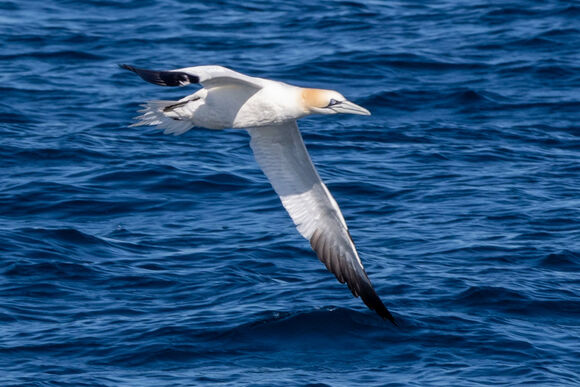 The Amazing Gannet
Dunworley beach had a rare visitor pop up on the slip!
On the evening on Thursday 16 July 2026 the very high spring tide mixed with the prolonged warm days may have contributed to this Flying Fish (Exocoetidae) landing on the slip at Dunworley Beach.
After taking a short video the person discovering it put it back into the ocean.
Any marine discoveries like this should be reported to:
The National Biodiversity Data Centre
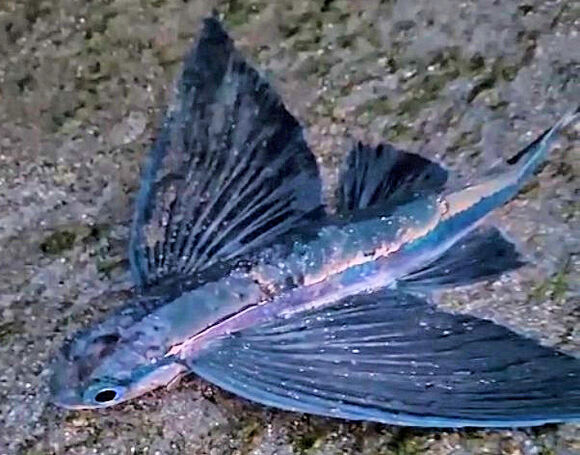 Flying Fish (Exocoetidae)
by Denis O'Regan
The Fulmar (Northern Fulmar - Fulmarus glacialis) Irish: Fulmaire is a fascinating bird
What are the origins of the name?
The name Fulmar is derived from two Old Norse words - fúll = “foul” and már = “gull” refers to the stinking stomach oil it produces.
Stinky Oil
This has several functions. Firstly It is an extremely energy-rich food they can regurgitate on the wing as sustenance on amazing long flights as far as 800km. This rich oil is also fed to their young.
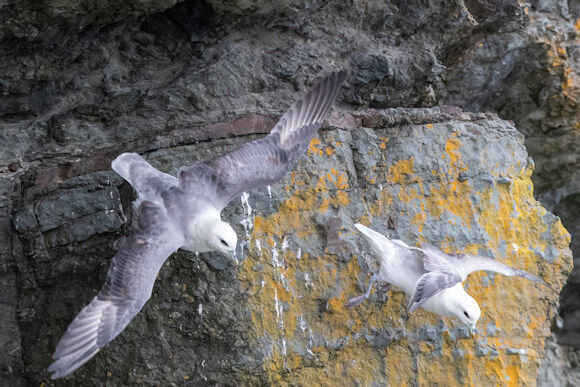 The Fascinating Fulmar
by Denis O'Regan
As part of my membership of the IWDG (Irish Whale and Dolphin Group) I am trained as a responder to attend to stranded dolphins and whales
Occasionally stranded dolphins are reported alive and depending on several factors it might be deemed appropriate to attempt guiding the animal back to the ocean. Dolphins are heavy. A Common Dolphin can weigh 150 kilograms. One method the IWDG employs is to place the dolphin in a strong sling which can take 6 to 8 volunteers to lift and carry it back to the sea. Trained IWDG responders are insured for this task however, it can be difficult to gather enough members especially as speed is critical.
Dolphins are not designed to be on land and when stranded it faces many dangers.
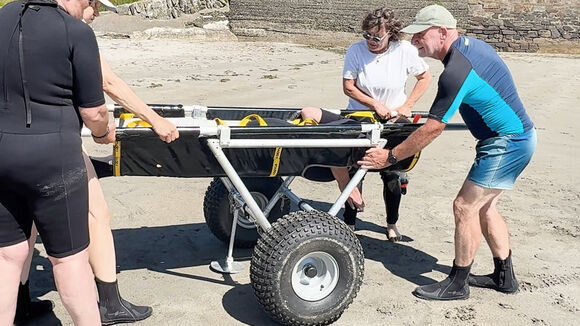 Testing DOLORES
by Denis O'Regan
Velella velella, commonly known as the by-the-wind sailor, is a unique marine organism that captivates both scientists and beachcombers
This morning (19 June 2026) a large number of Velella valella ('by-the-wind sailor') washed up on our beach in Donaghmore, Barryroe. This fascinating creature belongs to the phylum Cnidaria, which also includes jellyfish and corals, and is often mistaken for a jellyfish due to its gelatinous appearance. However, Velella is quite distinct in its biology and behavior.
Physical Characteristics
Velella velella is easily recognizable by its flat, oval-shaped body, which can reach up to 10 centimeters in length. The top of its body features a translucent, sail-like structure called a "sail" or "float." This sail allows the organism to harness wind energy, enabling it to drift across the surface of the ocean. The body is typically a striking blue or purple hue, which not only adds to its visual appeal but also serves as camouflage in the water.
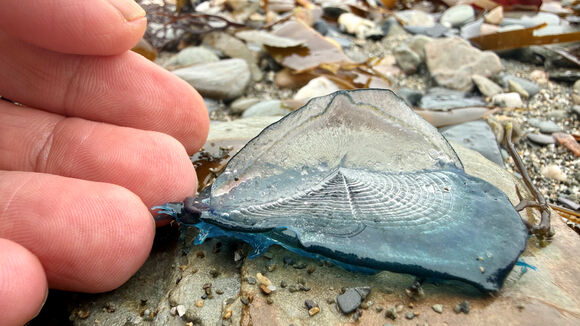 Velella velella (aka 'by-the-wind sailor')
by Denis O'Regan
The Ringed Plover seems to risk all
Whether it is keen anglers, winkle pickers, dog walkers or people trying to get away from crowded beaches, the 'hidden' beach at our home here in Donaghmore, Lislevane, West Cork has a good number of visitors.
It amazes me that people seem completely oblivious to the complaints of the Ringed Plovers.
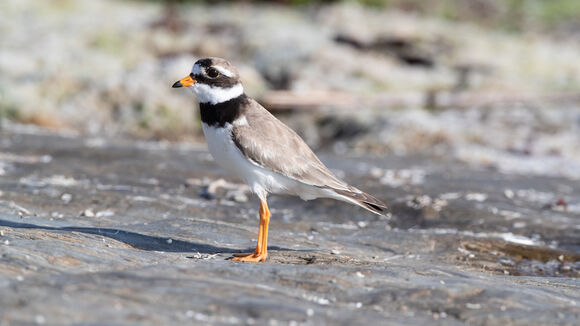 The Ringed Plover seems to risk it all
by Denis O'Regan
As the saying goes "Beauty is in the eye of the beholder" but I wonder whether the Wheatear is one of the prettiest birds?
There is just something about the perfect proportions and soft shaded colours that make the Wheatear so graceful.
Funnily enough the name Wheatear it's nothing to do with "Wheat".
Wheatear is a corruption of the word "White". And "ear" comes from old English word "arse" referring to the distinctive white rump seen when flying away from you.
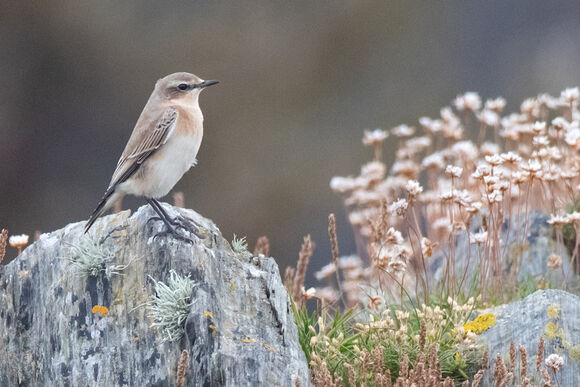 Wheatear (Oenanthe oenanthe) Irish: Clochrán
by Denis O'Regan
At 8:33am on Sunday morning 24 May 2026 I received an alert on the IWDG Cork Local Group Strandings WhatsApp Group
One of my many hats includes a responder for strandings of cetaceans between Kinsale and Mizen Head for the Irish Whale and Dolphin Group (IWDG). The location was Garrylucas beach about 30 minutes drive from home. So I jumped out of bed (no time for breakfast) loaded my stranding kit in the car and headed for the beach.
It was a beautiful sunny day with blue skies and just a light breeze and by the time I arrived the beach at Garrylucas was already filling up with families enjoying the summer weather.
It wasn't difficult to find the animal as a group of curious onlookers had already gathered around the obviously dead body. So I set about recording the data. Curious children and people of all ages began asking me questions and I did my best to answer them as I worked...
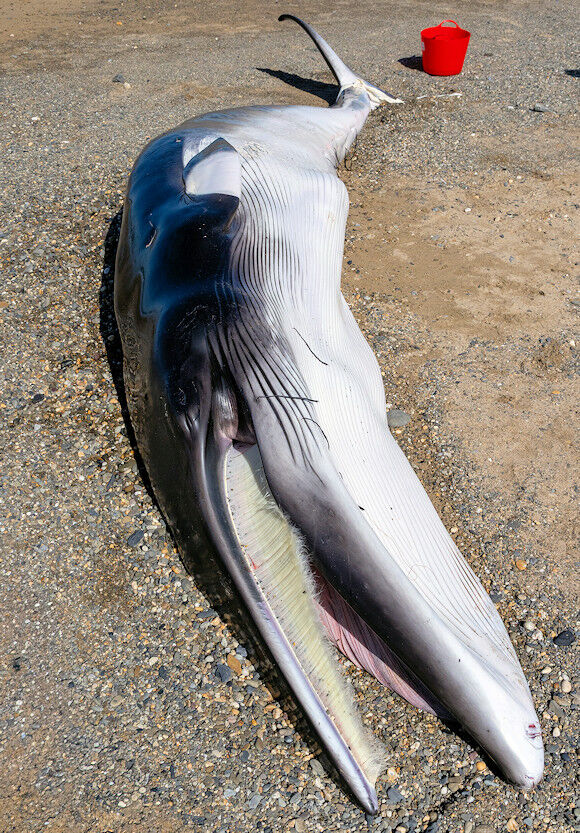 Minke Whale
by Denis O'Regan
Did you know the collective noun is a 'clattering' or 'chattering' of Choughs?
I prefer the latter as it seems most apt and for the sheer alliteration.
Although Chough is now pronounced "Chuff" it was possibly originally pronounced "Chew" an example of an onomatopoeic name after it's distinctive call.
What are these Choughs scheming on the garden wall?
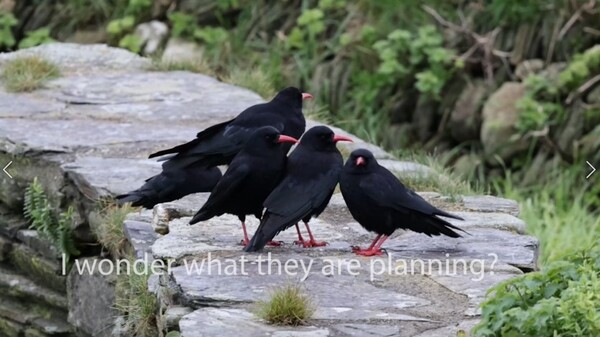 A Chattering of Choughs
by Denis O'Regan
Basking Sharks at the start of May
Like clockwork, when May arrives so do the Basking Sharks to West Cork
At least twenty Basking Sharks have arrived into the waters here in Donaghmore, Clonakilty Bay and Courtmacsherry Bay on 2 May 2026.
Here is some drone video taken from Donaghmore strand.
Also some underwater clips from Courtmacsherry Bay captured from the Lady Catherine from
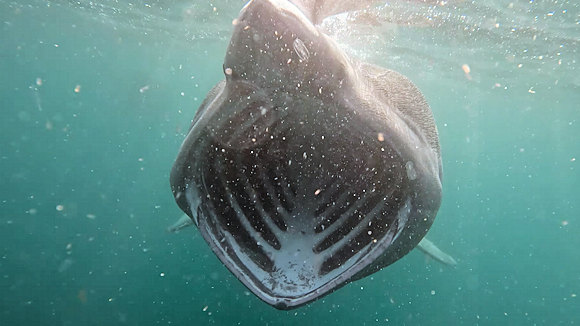 Basking Sharks
Search
Nature
-
Fungie the dolphin’s DNA on my wetsuit!
-
Emperor dragonfly
-
The Amazing Gannet
-
Flying Fish in Dunworley
-
The Fascinating Fulmar
-
Testing DOLORES (DOLphin Onshore REscue System)
-
The Intriguing World of Velella Velella
-
Mind where you step!
-
Is this the most beautiful bird?
-
Minke Whale Stranding: May 2026
-
A Chattering of Choughs
-
The Basking Sharks in May