
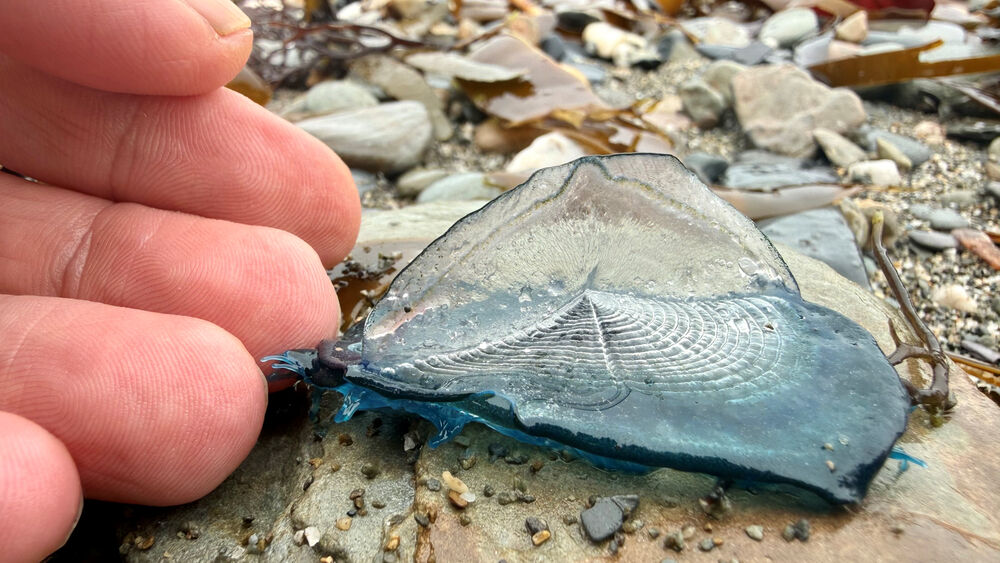
 Velella velella (aka 'by-the-wind sailor')
by Denis O'Regan
Velella velella, commonly known as the by-the-wind sailor, is a unique marine organism that captivates both scientists and beachcombers
This morning (19 June 2026) a large number of Velella valella ('by-the-wind sailor') washed up on our beach in Donaghmore, Barryroe. This fascinating creature belongs to the phylum Cnidaria, which also includes jellyfish and corals, and is often mistaken for a jellyfish due to its gelatinous appearance. However, Velella is quite distinct in its biology and behavior.
Physical Characteristics
Velella velella is easily recognizable by its flat, oval-shaped body, which can reach up to 10 centimeters in length. The top of its body features a translucent, sail-like structure called a "sail" or "float." This sail allows the organism to harness wind energy, enabling it to drift across the surface of the ocean. The body is typically a striking blue or purple hue, which not only adds to its visual appeal but also serves as camouflage in the water.
Habitat and Distribution
These remarkable creatures are found in temperate and tropical oceanic waters around the world. They are particularly prevalent in the Atlantic and Pacific Oceans, often appearing in large numbers along coastlines during warm weather. Velella velella usually drifts on the surface of the water, propelled by the wind, and if you look carefully you can find them washed up on our beaches here in West Cork, where they create a stunning visual display.
Feeding and Reproduction
Velella velella is carnivorous, feeding primarily on small fish and plankton. They catch their prey using specialized tentacles that contain stinging cells called nematocysts. When a prey item comes into contact with these tentacles, it is immobilized, allowing Velella to consume it.
Reproduction in Velella is quite intriguing. They are known to be hermaphroditic, meaning that each individual possesses both male and female reproductive organs. This adaptation increases their chances of reproduction, as they can fertilize their eggs with those of any other Velella they encounter.
Ecological Importance
Velella velella plays a significant role in marine ecosystems. As a part of the food web, they serve as a food source for various animals, including sea turtles and some species of fish. Additionally, their presence indicates healthy ocean conditions, making them important indicators of environmental health.
Velella velella is a remarkable example of nature's diversity and adaptability. Its unique sail-like structure, intriguing feeding habits, and ecological significance make it a noteworthy subject of study and admiration. So, the next time you visit the beach and stumble upon these beautiful blue creatures, take a moment to appreciate the fascinating world of Velella velella!
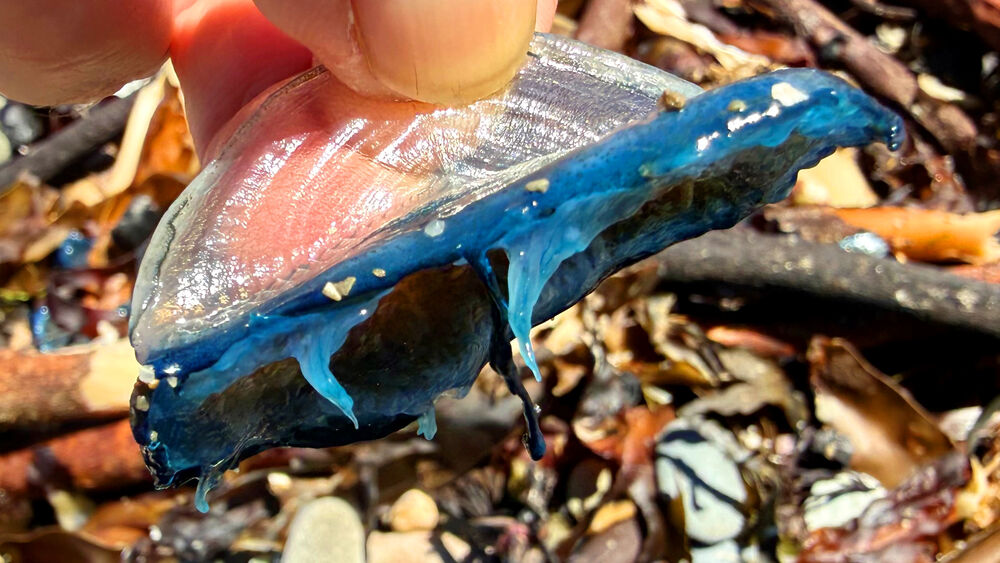 Velella velella - showing the stinging tentacles